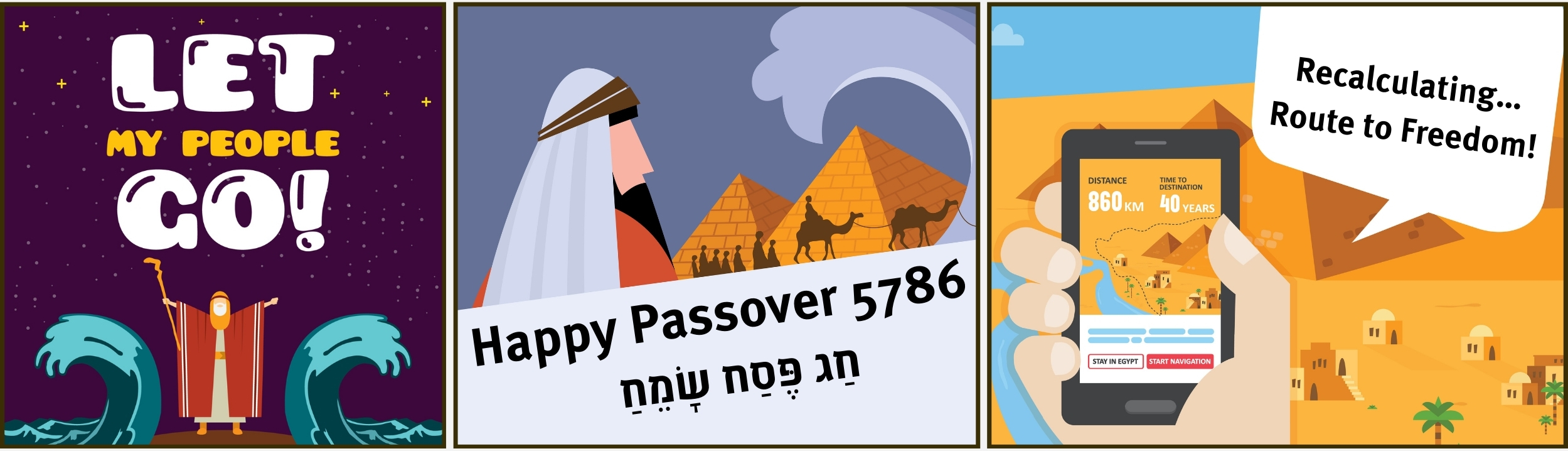
Passover commemorates the Exodus from Egypt and the birth of the Jewish people as a nation. Families gather for a Seder to retell the story of freedom, and throughout the holiday, chametz (leavened grain products) is not eaten or owned. In the Diaspora, Passover lasts eight days (seven in Israel).

Don’t forget to sell your chametz by March 31 using this form.
Wednesday, April 1
Fast of the Firstborn / Erev Pesach / 1st Seder
7:00 am – Morning Minyan/Siyyum Bechorim
10:48 am – Last time to eat Chametz
11:51 am – Biyyur Chametz
6:00 pm – Mincha/Ma’ariv
6:59 pm – Festival Candle Lighting
Thursday, April 2
Pesach 1st day / 2nd Seder
9:00 am – Festival Service
10:30 am – Junior Congregation
11:00 am – Passover Pray ‘n Play
7:00 pm – Mincha
8:00 pm – Ma’ariv
8:00 pm – Candle Lighting
Friday, April 3
Pesach 2nd day
9:00 am – Festival Service
10:30 am – Junior Congregation
11:00 am – Passover Pray ‘n Play
6:00 pm – Mincha/Kabbalat Shabbat / Ma’ariv
7:01 pm – Yom Tov Ends / Shabbat Candle Lighting
Saturday, April 4
Shabbat Chol Hamoed Pesach
9:00 am – Shabbat Service
10:30 am – Junior Congregation
11:00 am – Tot Shabbat
6:45 pm – Mincha
8:00 pm – Ma’ariv / Havdalah
8:03 pm – Shabbat Ends
Sunday, April 5
Chol Hamoed Pesach
8:45 am – Morning Minyan
7:30 pm – Evening Minyan
Monday, April 6
Chol Hamoed Pesach
7:30 am – Morning Minyan
7:30 pm – Evening Minyan
Tuesday, April 7
Chol Hamoed Pesach / Erev Yom Tov
7:30 am – Morning Minyan
6:30 pm – Mincha / Ma’ariv
7:05 pm – Candle Lighting
Wednesday, April 8
Pesach 7th day
9:00 am – Festival Service
10:30 am – Junior Congregation
11:00 am – Passover Pray ‘n Play
7:00 pm – Mincha
8:05 pm – Ma’ariv
8:08 pm – Festival Candle Lighting
Thursday, April 9
Pesach 8th day / Yizkor
9:00 am – Festival Service
10:30 am – Junior Congregation
11:00 am – Passover Pray ‘n Play
7:00 pm – Mincha
8:05 pm – Ma’ariv / Havdalah
8:09 pm – Yom Tov Ends
NOTE: No chametz should be eaten until after Yom Tov ends.
Leading the Seder conversation is a challenge. Let Beth El’s Seder Supplement help you. Consider printing copies of these handouts in advance to spark a Passover discussion at the Seder table. The first handout is for all the guests: it contains a Torah text study and a series of quotes for discussion. While the second handout is for the Seder leader. This one contains Rabbi Freedman’s insights on the Torah study, as well as a series of Seder trivia questions to keep things interesting. Enjoy!
They are two PDF handouts that you can download below:
Text Study: The Seeds of Oppression
What motivates Pharaoh to enslave the Israelites? |Torah: Exodus 1:8-14
Text Study: The Seeds of Oppression
What motivates Pharaoh to enslave the Israelites? | Torah: Exodus 1:6-14
1175 Sheridan Road, Highland Park, IL 60035 | (847) 432-8900 | [email protected] |


Copyright © 2026. All rights reserved. Website designed by Addicott Web.